
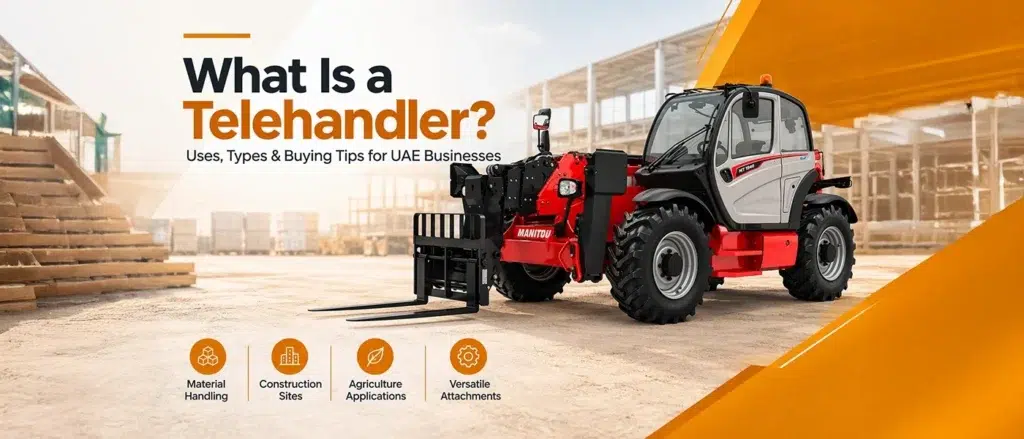
Plenty of people new to site equipment assume a telehandler is simply a forklift with a longer arm. It’s an understandable guess, and it’s only half right. The two machines share forks and a similar job title, but they lift in different ways and solve different problems. Knowing the difference is what stops you paying for the wrong machine.
This guide covers what a telehandler is, what it’s used for, how the main types compare and what to check before you buy in the UAE.
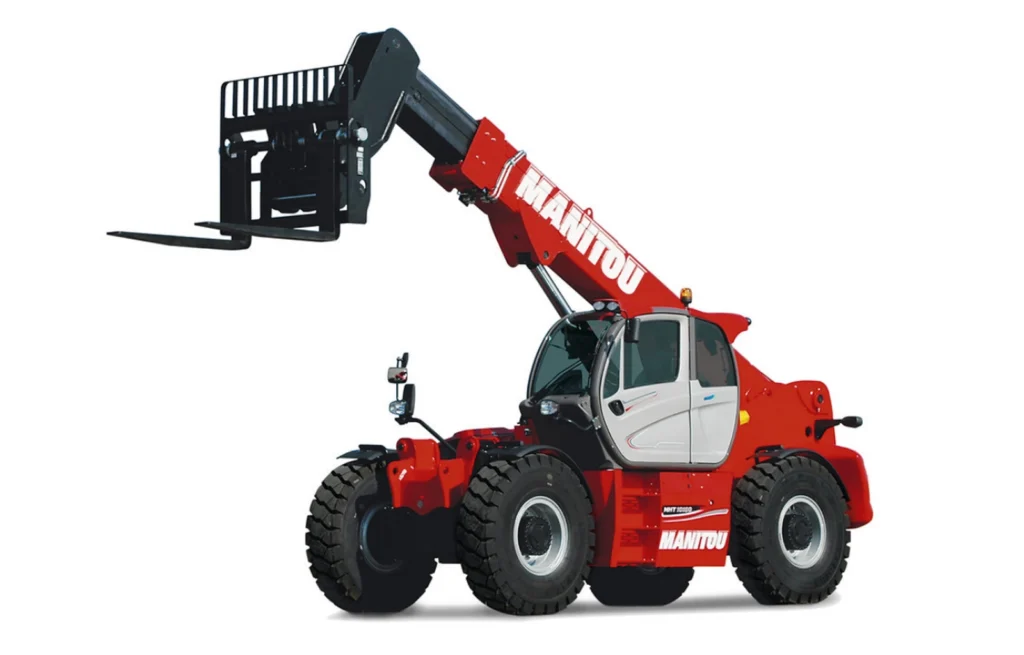
A telehandler, short for telescopic handler, is a wheeled machine with a boom that extends forwards and upwards, carrying forks, a bucket or another attachment at the tip. It combines the lifting ability of a crane with the mobility of a forklift.
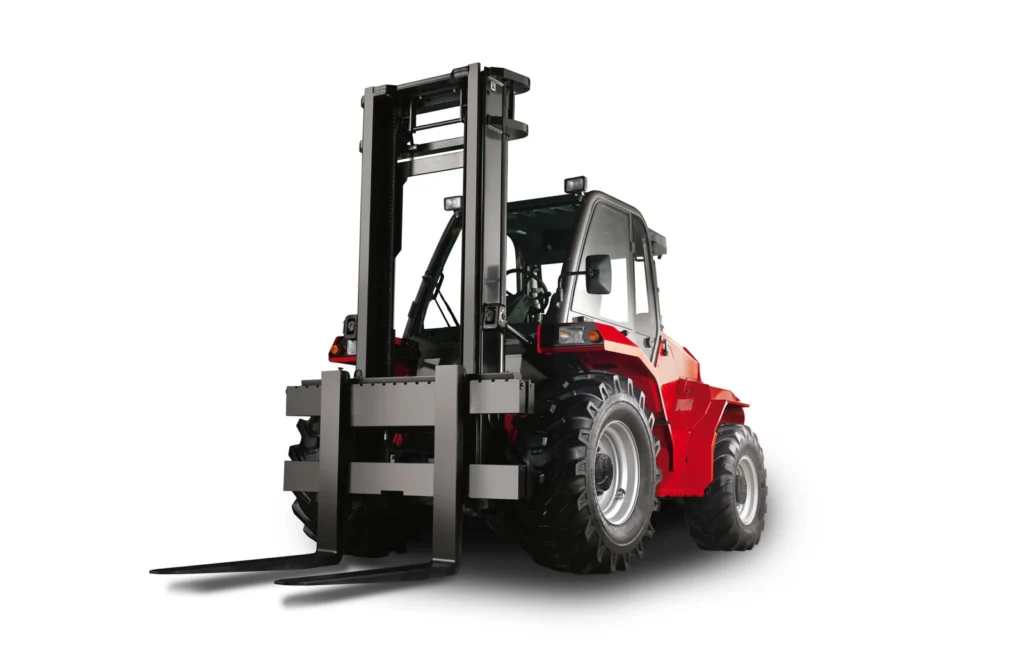
You’ll also hear it called a telehandler forklift or, in plural, telescopic handler forklifts. The terms describe the same machine. The real difference from a standard forklift is that a telehandler’s boom reaches out and up, while a forklift’s mast only moves straight up and down.
That reach matters on real worksites. A telehandler can place a load over an obstacle, onto a raised platform or into a trailer without driving right up to it.
Telehandlers earn their place across three UAE sectors in particular:
Swap the forks for another attachment and the same machine becomes something else. Buckets, jibs, winches, pallet fork positioners and work platforms all fit. A single telehandler can end up doing three or four jobs, which is why many contractors consider it one of the most versatile machines on site.
Quick answer: choose a forklift for repetitive pallet work on flat, firm ground. Choose a telehandler when you need reach, height or flexibility on uneven ground.
| Factor | Standard forklift | Telehandler |
| Lift path | Straight up and down | Up, out and forwards |
| Terrain | Smooth floors, firm yards | Rough, sandy or sloping sites (rough-terrain models) |
| Reach over obstacles | No | Yes |
| Attachments | Limited | Wide range |
| Best for | High-volume pallet handling | Mixed lifting, placing and loading |
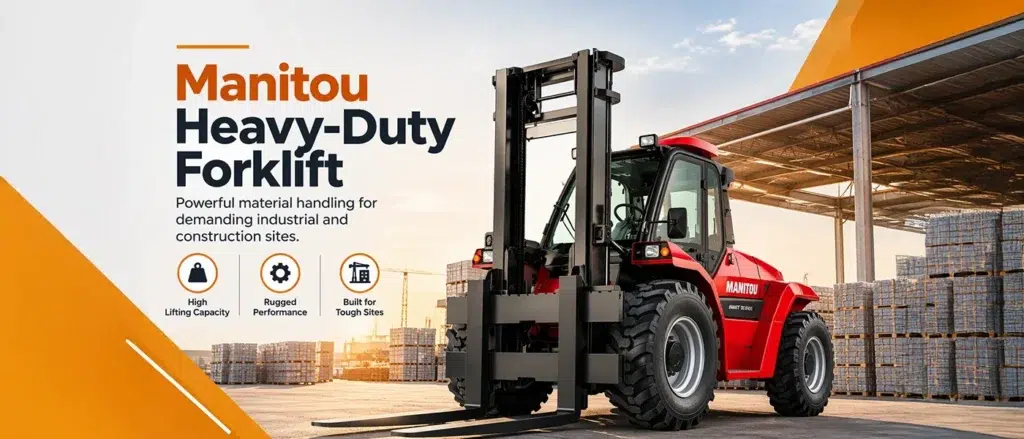
If most of your day is moving pallets down a warehouse aisle, a heavy duty forklift will serve you better. If your loads go up, over and into awkward places, a telehandler is the better fit.
Telehandlers fall into two families, and choosing between them is the biggest decision you’ll make.
A fixed telehandler has a boom mounted on a chassis that doesn’t rotate. The machine moves forwards and back, and the boom lifts and extends in front of it. This design is simple, robust and cost-effective, and it covers the great majority of everyday lifting jobs. If you’re not sure which type you need, a fixed model is usually the sensible starting point.
A rotating telehandler has a turret that turns the whole boom through 360 degrees, much like a crane. You can park once and place loads on any side without repositioning. That makes it a strong choice on cramped sites, for tall façade work and for any job where the machine can’t drive around freely.
Rotating models often carry a work platform too, so a single machine can lift both materials and people, provided the right certification and safety systems are in place.
A heavy duty telehandler is built for bigger loads on demanding projects such as steel erection, precast panels and large industrial sites. It trades some compactness for capacity and strength.
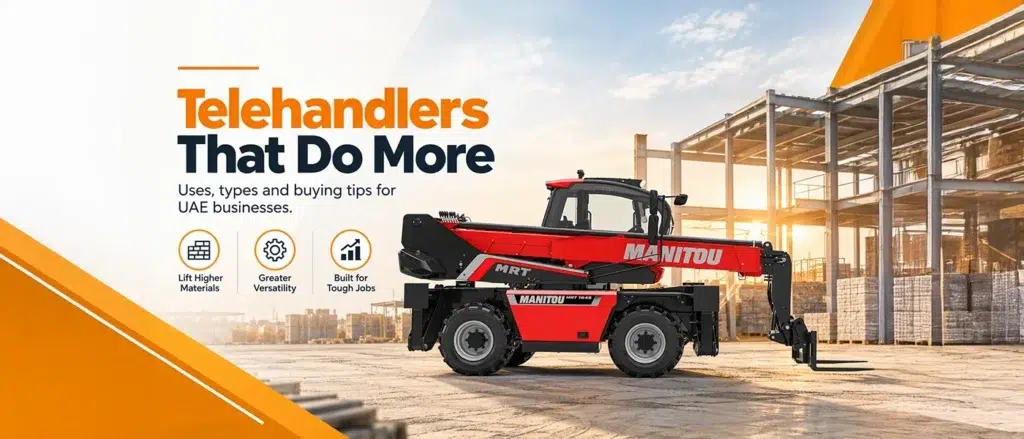
Al Shirawi Enterprises offers Manitou telehandlers across all three categories:
| Type | Models | Typical use |
| Fixed telehandlers | MT-X 1840, MT-X 1740 | General lifting, loading and placing on construction, logistics and agricultural sites |
| Rotating telehandlers | MRT-X 1645, MRT-X 2260, MRT-X 2545 | Confined sites, high placement, crane-style work and platform use |
| Heavy duty telehandlers | MHT-X 790, MHT 1018 | Heavy loads on large industrial and infrastructure projects |
Every model has its own load chart, and the right one depends on your heaviest load, your placement height and how far out you need to reach. The sales team can match those requirements to a model and share the full specification sheets.
Brochures can overwhelm a first-time buyer. Four numbers do most of the work:
That last point deserves a closer look. A telehandler’s rated capacity drops as the boom extends, because the load acts further from the machine’s centre of gravity. A machine rated for its maximum capacity does not lift that weight at full height and full reach. It lifts a fraction of it. Every machine has a load chart showing exactly what it can handle at each boom angle and extension.
Expert tip: before choosing a model, write down your heaviest load, the height you need to place it and the distance from where the machine can stand. Then check the load chart at that exact point. If the machine only just meets your numbers, size up.
The brochure figures are the start, not the finish. These factors decide whether a machine performs well for years or becomes a headache.
Sand, gravel, slopes and tight access all affect which chassis, tyres and steering mode suit you. Four-wheel drive and multiple steering modes help in loose or uneven ground.
UAE summers are hard on any engine and hydraulic system. Look for effective cooling, good filtration and service points you can reach easily. A machine that struggles in extreme heat isn’t a bargain at any price.
Think about what you’ll need in two years, not only today. A quick-hitch system makes changing attachments fast and safe.
A tired or blind-sided operator is a safety risk. Good all-round visibility, a comfortable cab and a clear load-moment indicator make a real difference over a long shift.
A telehandler spends its life working hard, so a reputation for reliability matters more than a low sticker price. Manitou has built that reputation over decades of telehandler manufacturing.
This is the factor buyers most often underestimate. Ask who will service it, how quickly parts arrive and what happens when it breaks down on a deadline.
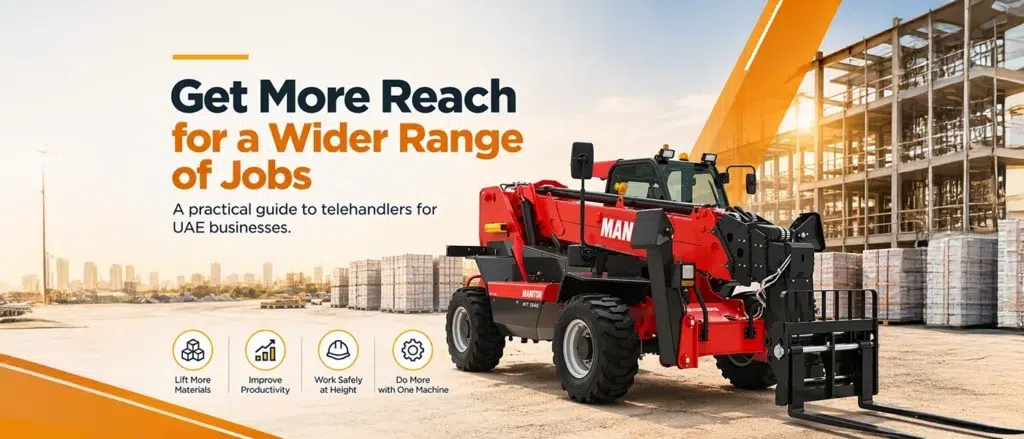
Telehandlers are safe when used properly and unforgiving when they aren’t. Most incidents come from a handful of avoidable mistakes:
Better lifting practice is mostly discipline: know the chart, plan the lift, check the ground and never rush. Load-moment indicators and stability systems help, but they can’t replace a trained operator.
A telehandler that sits idle costs you money every day. Site schedules don’t stop for a failed hydraulic hose or a worn filter.
That’s why many buyers weigh the dealer as heavily as the machine. A good dealer offers:
Regular, planned servicing is almost always cheaper than breakdown repairs. It also keeps safety systems working as designed, which protects your operators.
Run through these before you speak to any supplier:
If you can answer these, you’re ready for a useful conversation about specifications rather than a sales pitch.
Choosing a telehandler is easier when someone who knows the machines helps you match specifications to your actual jobs. Al Shirawi Enterprises distributes Manitou handling and lifting equipment in the UAE, including fixed and rotating telehandlers and the MHT heavy duty range, with genuine spare parts, after-sales service and maintenance contracts to keep your equipment working.
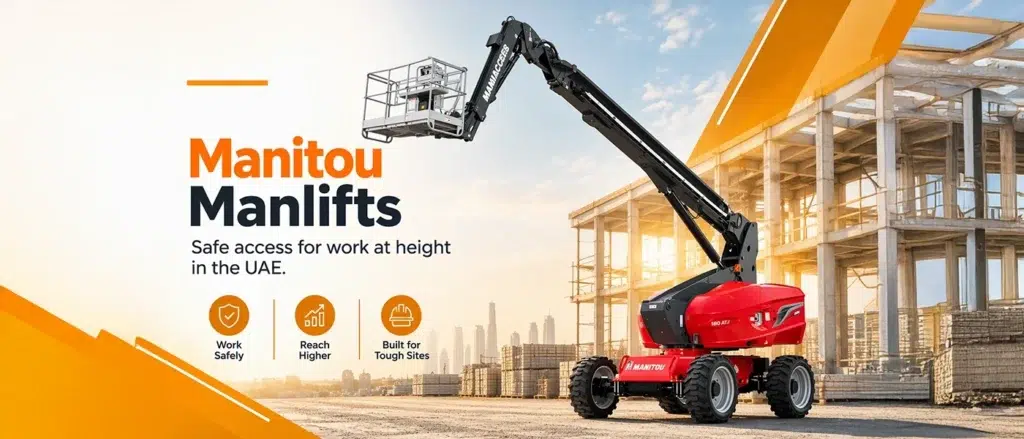
ASE also supplies Manitou manlifts for work at height and heavy duty forklifts for high-volume material handling, so one supplier covers several requirements on the same site.
Tell the team what you lift, how high and where, and they can recommend the right telehandler for the job.
Contact Al Shirawi Enterprise:
Al Shirawi Enterprises Sheikh Zayed Road, Al Quoz, Dubai, United Arab Emirates P.O. Box 7427, Dubai, UAE
Enquire on WhatsAppA telehandler lifts, carries and places loads at height and distance using a telescopic boom. Fitted with attachments, it can also dig, sweep, hoist and lift personnel platforms.
Not quite. Both lift loads on forks, but a telehandler’s boom extends forwards and upwards, while a forklift’s mast only lifts vertically. People often say “telehandler forklift” to describe the same machine.
A fixed telehandler has a non-rotating boom and handles most general lifting. A rotating telehandler has a 360-degree turret, so it can place loads on any side without moving, which suits tight sites and crane-style work.
It depends on the model. Compact machines lift less, while a heavy duty telehandler handles the largest loads. Capacity falls as the boom extends, so always check the load chart for your exact lift.
Operators need proper training and authorisation, and the exact requirements depend on the emirate, your employer and the site. Check with your local authority and your site safety team before putting anyone in the cab.
Follow the manufacturer’s schedule, typically based on running hours, and carry out daily pre-start inspections. A maintenance contract keeps this on track.
Only with an approved work platform and the correct safety systems, and only under the right procedures and operator certification. Never lift people on forks or in a bucket. Al Shirawi Enterprises also offers Manitou manlifts, such as the 200ATJ, if this is something you require.
Picture a morning on a mid-sized farm. The tractor is a 75…

Most fleet buyers spend weeks comparing trucks and about an afternoon comparing…
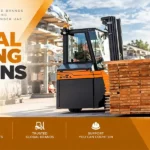
A warehouse manager walks the floor at a Jebel Ali distribution centre…
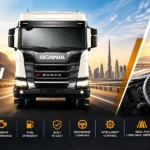
A driver on the Dubai–Abu Dhabi–Al Ain corridor can easily log ten…

A warehouse manager in Jebel Ali once told us he’d bought a…
Tell us about your requirement, and our team will contact you within 4 business hours.
Share your requirement — our team will reach out shortly.