
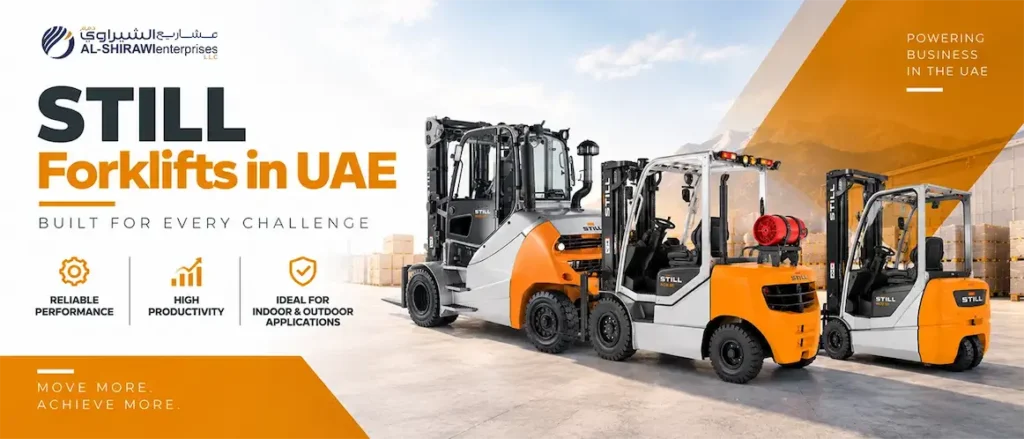
A warehouse manager in Jebel Ali once told us he’d bought a forklift rated 3 tons, confident it could handle his heaviest pallets of steel coils. Three weeks in, the mast started struggling on loads that, on paper, should have been well within limits. The problem wasn’t the machine. It was the load center; a detail that didn’t make it into the buying decision at all.
This mix-up happens more often than most buyers expect, and it’s rarely about dishonest suppliers or faulty equipment. It’s about a gap in understanding between what “3 ton” or “10 ton” actually promises, and what real-world load weight demands. Get this wrong, and you either overpay for capacity you’ll never use, or underbuy and put your operation — and your operators — at risk.
This guide breaks down exactly how forklift ton capacity works, why it isn’t the same as the weight sitting on your pallet, and how to size a machine correctly before you spend a single dirham.
A forklift’s ton rating is not a blanket promise that it can lift that weight anywhere, anytime, under any conditions. It’s a maximum rated capacity, measured under specific test conditions defined by the manufacturer; typically, at a standard load center (usually 500mm from the face of the forks) and with the forks at a set lift height, usually close to ground level.
So, when a forklift is marketed as a “3 ton forklift,” it means: this machine can safely lift 3,000kg when that weight is centered 500mm from the fork face, mast upright, on level ground. Change any one of those variables, and the safe lifting capacity changes with it.
This is the single most misunderstood point in forklift buying, and it’s the root cause of most “the forklift can’t lift what it says it can” complaints.
Load weight is simple: it’s what your pallet, crate, or coil actually weighs on a scale. Load center is where that weight is concentrated relative to the forks. The further the center of gravity sits from the fork face, or the higher the forks are raised, the less weight the truck can safely handle.
Quick answer: A forklift’s rated ton capacity only applies at the standard load center. Move the load’s center of gravity further out, or lift it higher, and the safe working capacity drops, sometimes significantly.
| Load Center Distance | Approx. Capacity of a Rated 3-Ton Forklift |
| 500mm (standard) | 3,000 kg (full rated capacity) |
| 600mm | ~2,500 kg |
| 800mm | ~1,875 kg |
| 1,000mm | ~1,500 kg |
(Figures are illustrative — always confirm exact derating with the load chart on your specific model.)
This is why a bulky, unevenly shaped load — timber, pipes, machinery parts — can overload a forklift well before its rated ton capacity is reached on paper.
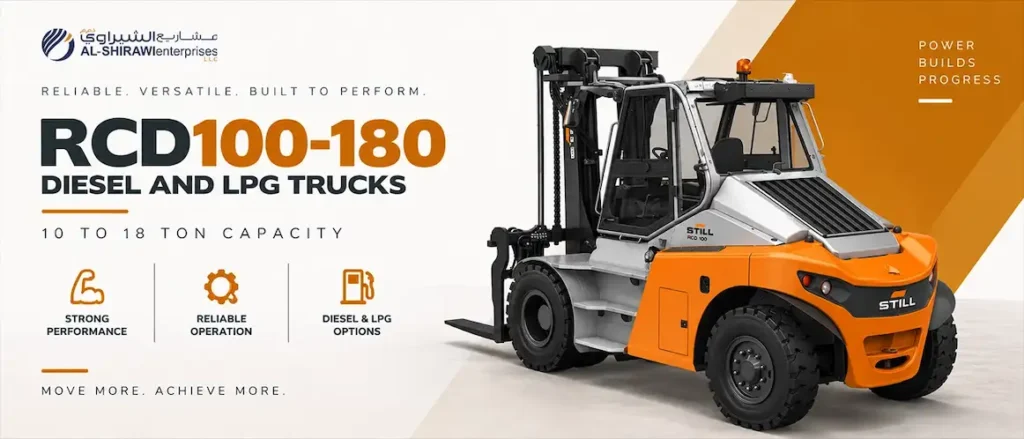
A 10 ton forklift isn’t a warehouse workhorse. It’s built for heavy industrial and outdoor material handling: steel yards, cement and marble processing, shipping ports, precast concrete, and heavy machinery movement. If your operation regularly moves loads in the 6–9 ton range, or handles dense, irregular cargo like steel beams or granite blocks, sizing down to save on upfront cost usually backfires through slower cycle times, excessive strain on the machine, and safety risk.
Buyers in this category should pay close attention to load center specifications more than anywhere else, since heavy industrial loads are rarely compact or centered.
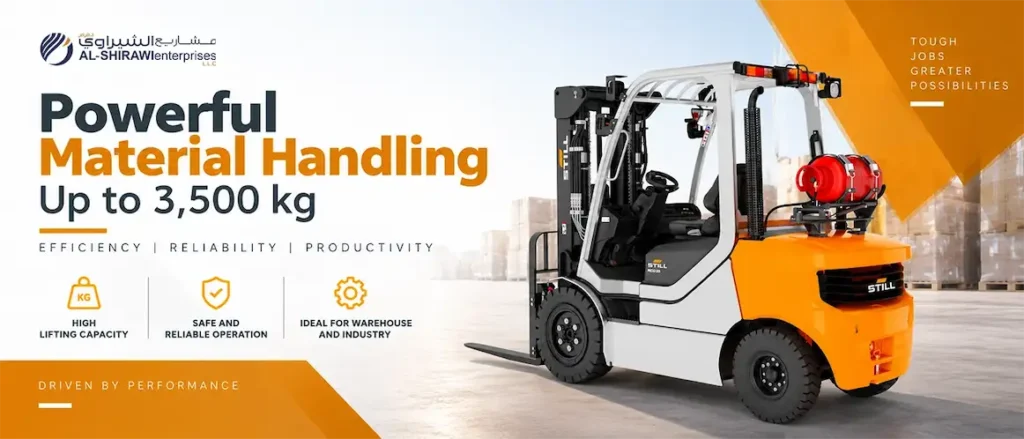
The 3 ton class covers the bulk of general warehousing, logistics, retail distribution, and light manufacturing in the UAE. It’s consistently one of the most searched capacities for good reason. It comfortably handles standard palletized goods, container loading, and typical racking heights without the fuel, maneuvering, or maintenance costs of a heavier machine.
On forklift 3 ton price: Diesel models typically sit at a lower upfront cost than electric equivalents, while electric 3-ton forklifts cost more initially but reduce running costs over time through lower energy and maintenance spend. Exact pricing depends on mast height, tire type (pneumatic vs cushion), attachments, and whether the unit is new or reconditioned. Getting a specification-matched quote is the only reliable way to compare forklift price in UAE across suppliers, since two machines quoted at similar prices can have very different build quality and after-sales support behind them.
Diesel or Electric: Match the Machine to the Load Profile
| Factor | Diesel Forklift | Electric Forklift |
| Best for | Outdoor, heavy-duty, continuous use | Indoor warehouses, retail, food-grade |
| Ton capacity range | Wide, including 5–10 ton+ | Typically stronger up to mid-range tons |
| Running cost | Higher fuel cost | Lower cost per hour |
| Noise & emissions | Higher | Near-silent, zero on-site emissions |
| Upfront price | Generally lower | Generally higher |
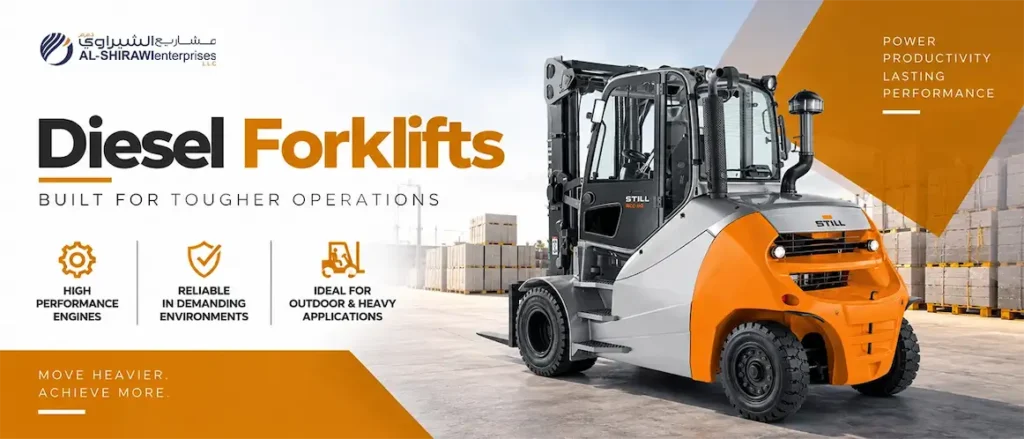
If you’re comparing a diesel forklift for sale against an electric forklift for sale for the same ton class, the deciding factor usually isn’t capacity, it’s environment. Enclosed warehouses with tight aisles favor electric. Yards, ports, and construction sites favor diesel or LPG for range and torque under load.
Skipping any one of these steps is how a “correctly rated” forklift ends up underperforming on the warehouse floor.
A ton rating is only as trustworthy as the engineering and testing behind it. This is where German-engineered STILL forklifts, supplied and supported by Al Shirawi Enterprises, make a measurable difference — load charts that hold up under real working conditions, consistent hydraulic performance across the full lift range, and a build quality that doesn’t quietly derate over years of heavy use. Combined with genuine spare parts and dedicated after-sales service across the UAE, it means the capacity printed on the machine’s plate is one you can actually rely on, load after load.
For businesses evaluating forklift for sale options — whether a single 3 ton unit for a new warehouse or a 10 ton machine for a yard operation — that reliability is often the real differentiator, well beyond the initial forklift price.
Choosing between a forklift 10 ton and a 3 ton unit — or comparing forklift for sale Dubai listings on price alone — is only useful once you know your real load weight, center of gravity, and lift height requirements.
Al Shirawi Enterprises works with businesses across the UAE to match STILL forklifts to actual operational demands, backed by genuine spare parts and responsive after-sales service.
Get in touch with Al Shirawi Enterprises
Dubai, UAE
Tel: +971 4 371 8585
Email: inquiries.ase@alshirawi.ae
Website: www.alshirawienterprises.com
Al Quoz, Dubai | DIP | Abu Dhabi | Sharjah | Ras Al Khaimah
We’re happy to discuss your load profile and get a specification-matched forklift quote before you commit to a machine that may not match your real-world lifting needs.
Capacity is the maximum weight a forklift can lift under standard test conditions (defined load center and lift height). Load weight is what your actual cargo weighs, which may exceed safe limits depending on its shape and how it’s positioned on the forks.
This usually comes down to load center or lift height. Bulky or off-center loads, or lifting at full mast height, reduce the safe working capacity below the rated figure.
For most palletized warehouse operations, yes — a 10 ton forklift is designed for heavy industrial or yard work. Standard warehousing is usually well served by 2–3 ton classes.
Fuel type (diesel vs electric), mast height, tire configuration, attachments, and whether the unit is new or refurbished all move the price. Always compare like-for-like specifications, not just the headline capacity.
Electric is generally preferred indoors for warehouses and retail environments due to zero emissions and lower noise. Diesel remains the stronger choice for outdoor, heavy-duty, or continuous-use applications.
Most experienced fleet managers recommend sizing 10–15% above your known maximum load weight to account for load center variation and future operational changes.
No — the rate of capacity loss as load center increases varies by model and mast design, which is why comparing manufacturer load charts directly is more reliable than comparing ton ratings alone.

Most fleet buyers spend weeks comparing trucks and about an afternoon comparing…
A warehouse manager walks the floor at a Jebel Ali distribution centre…
A driver on the Dubai–Abu Dhabi–Al Ain corridor can easily log ten…
Ask most people what a walk-behind sweeper is, and you’ll get some…

A fleet manager in Sharjah once told us his biggest fear wasn’t…
Tell us about your requirement, and our team will contact you within 4 business hours.
Share your requirement — our team will reach out shortly.